The world of agriculture is undergoing a technological revolution, and at the forefront of this change is the use of agricultural drones. These advanced machines are transforming traditional farming practices by providing efficient, data-driven solutions that enhance productivity and sustainability. In this article, we will explore how agricultural drones are making a significant impact in modern farming.
The Role of Technology in Agriculture
Farming has always been about managing resources\u2014land, water, and labor. However, traditional methods often involve guesswork, inefficiency, and heavy physical effort. Technology, especially drones, is changing this narrative by enabling farmers to make precise and informed decisions.
Agricultural drones, equipped with advanced imaging tools, sensors, and GPS systems, are capable of performing tasks that would otherwise take hours or even days.
How Agricultural Drones Are Used
1. Crop Monitoring
One of the biggest challenges for farmers is monitoring vast fields for potential issues such as pests, diseases, or inadequate irrigation. Drones equipped with high-resolution cameras and multispectral sensors can identify stressed areas of crops that are invisible to the human eye. This allows farmers to take quick action, preventing further damage.

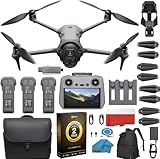
DJI Mavic 3 Pro Drone with Fly More Combo DJI RC, Flagship Triple-Camera Drone with 4/3 CMOS Hasselblad Camera, with 3 Batteries, Charging Hub, 128 GB Micro SD Card Landing Pad, Waterproof Backpack and More
Features
- Advanced Triple-Camera System - The Mavic 4 Pro’s Infinity Gimbal features a triple-camera system: a 100MP Hasselblad wide-angle lens with 6K60 HDR and HNCS color, a 48MP medium tele for portraits, and a 50MP tele for sharp long-range shots. All support up to 4K slow motion (4K120 on wide/medium, 4K100 on tele), dual native ISO fusion, 10-bit D-Log, RAW frame stacking, and intelligent modes like Panorama and Subject Focusing—delivering professional results in any setting.
- Improved Tracking - The previous generation sported ActiveTrack technology, which is upgraded to ActiveTrack 360 on the Mavic 4 Pro. The most important difference is that this drone can now track autonomously, making navigation decisions on its own. With the Mavic 4 Pro's low-light capabilities, tracking is now even better under city lights or at twilight. Tracking can even keep its focus if the lower half of the subject is partially obscured during the shot. The Mavic 4 Pro's tracking system also has better directional awareness and an up to 656' range when detecting vehicles, significantly improving your automotive cinematography.
- Extended Flight Time - Thanks to its optimized battery system, the Mavic 4 Pro offers up to 51 minutes of flight time, allowing for prolonged shooting sessions without frequent interruptions.
- Improved Tracking - The previous generation sported ActiveTrack technology, which is upgraded to ActiveTrack 360 on the Mavic 4 Pro. The most important difference is that this drone can now track autonomously, making navigation decisions on its own. With the Mavic 4 Pro's low-light capabilities, tracking is now even better under city lights or at twilight. Tracking can even keep its focus if the lower half of the subject is partially obscured during the shot. The Mavic 4 Pro's tracking system also has better directional awareness and an up to 656' range when detecting vehicles, significantly improving your automotive cinematography.
- Night Flight - A total of six high-performance low-light fisheye sensors provide 0.1-lux sensitivity for omnidirectional obstacle sensing that supports safe nighttime filming. Dual processors help with high resolution awareness that equates to obstacle avoidance at speeds of up to 40 mph in low-light conditions, such as by street light illumination. This visual system ensures accurate positioning in near-pitch-black places and those with poor satellite signals. If light falls to below 0.1 lux, the Mavic 4 Pro's forward-facing LiDAR can still detect obstacles for quick braking and collision avoidance.
2. Precision Spraying
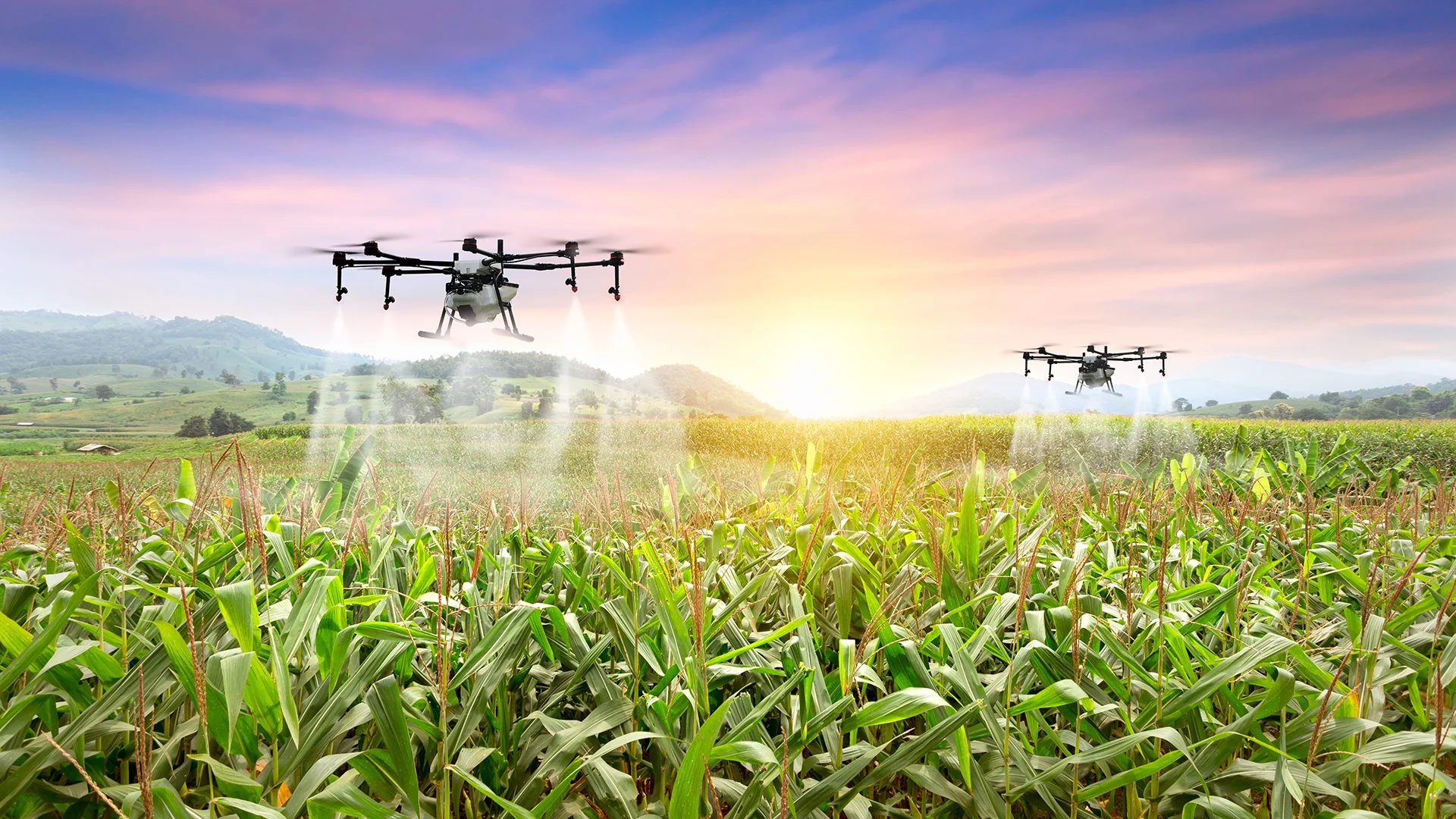
Unlike traditional spraying methods, which often waste chemicals, drones can apply fertilizers, pesticides, and herbicides with pinpoint accuracy. They only target the areas that need treatment, saving costs and reducing environmental impact.

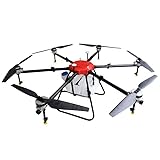
automatic sprayer drone 30L tank capacity payload drone for agriculture spraying drone quadcopters multicopter
Features
- Liquid sensor will alarm you when no pesticides in the tank;
- Carbon fiber frame, water-proof material;
- Radar (terrain level sensor), fittable for slope terrain.
- Camera, image transmission, FPV.
3. Soil and Field Analysis
Agricultural drones can also assess soil health by analyzing its composition and moisture levels. By generating detailed maps, they help farmers understand which areas need improvement, paving the way for optimized planting strategies.

4. Livestock Tracking
While most people associate drones with crops, they are equally useful for managing livestock. Drones can track the movement and health of animals, locate lost livestock, and monitor pasture conditions.

DJI Mavic 3 Pro with DJI RC, Flagship Triple-Camera Drone with 4/3 CMOS Hasselblad Camera, 43-Min Flight Time, 15km HD Video Transmission, FAA Remote ID Compliant, 4K Camera Drone for Adults
Features
- Hasselblad Main Camera - Mavic 3 Pro has a 4/3 CMOS sensor, 24mm format equivalent, f/2.8-f/11, 20 MP. The Hasselblad 4K drone camera supports shooting RAW photos with a dynamic range of up to 12.8 stops.
- FAA Remote ID Compliant - DJI Mavic 3 Pro complies with the FAA Remote ID rule. Please check the compliance document below to see the user guide for Remote ID, and you can visit the FAA's website for requirements of drone registration and Remote ID.
- Omnidirectional Obstacle Sensing and APAS 5.0 - Mavic 3 Pro ensures you fly safely and create with peace of mind. Eight vision sensors work with a vision computing engine to sense obstacles.
- 43-minute max flight time - Mavic 3 Pro gives you more confidence to fly further and spend less time worrying about the battery level of the long-range drone with camera for adults.
- DJI O3+ - Mavic 3 Pro features a transmission distance of up to 15 km with stable signals, presenting a more coherent camera view A professional 4K camera long-range drone for adults.
Benefits of Agricultural Drones
1. Time Efficiency
Tasks that once took days like field inspections or mapping can now be completed in just a few hours.
2. Cost Savings
By optimizing resource usage and reducing wastage, drones lower overall farming expenses.
3. Enhanced Productivity
With the detailed insights drones provide, farmers can make data-driven decisions, leading to better crop yields and healthier livestock.
4. Sustainability
Precision farming reduces the overuse of chemicals, conserving resources and protecting the environment.
Challenges in Implementing Drone Technology
Despite their advantages, agricultural drones come with certain challenges.
- Cost: While drones are becoming more affordable, the initial investment may still be out of reach for small-scale farmers.
- Training: Farmers need to learn how to operate drones and interpret the data they provide.
- Regulations: Many countries have strict drone usage laws that may limit their application in farming.
The Future of Agricultural Drones
As technology evolves, agricultural drones will become even more accessible and efficient. Artificial intelligence, machine learning, and IoT integration will further enhance their capabilities, enabling real-time analysis and automated farming systems.
In the near future, we can expect drones to be a standard tool for farmers, bridging the gap between traditional farming practices and cutting-edge technology.
Conclusion
Agricultural drones are proving to be a game-changer for farmers around the world. They offer modern solutions to age-old farming challenges, enabling farmers to work smarter, not harder. As adoption grows and technology advances, agricultural drones will continue to revolutionize the way we cultivate and sustain our food systems.
Farming is no longer just about tools and labor; it is about technology and precisions and agricultural drones are leading the charge.